The Quick Take…
- The capital-intensive buildout of digital infrastructure is transforming the U.S. power grid and may create opportunities for alternative investors through private credit, infrastructure debt, and other private-market investments.
- Tech hyperscalers are underwriting the revitalization of the domestic energy grid, funding nuclear restarts and next-generation geothermal energy to secure baseload power.
- Private credit and structured infrastructure debt offer stable, cash-flowing yields backed by multi-decade power purchase agreements with investment-grade technology giants.
The Lead
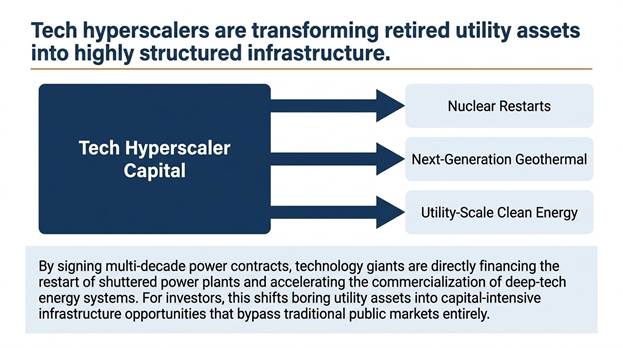
The consensus on artificial intelligence is obsessed with the strain it places on the domestic power grid. What the headlines overlook is how the capital behind this digital expansion is actively underwriting a major revitalization of American energy infrastructure. Tech hyperscalers are no longer just customers; they are acting as private funding vehicles for utility-scale clean energy assets.
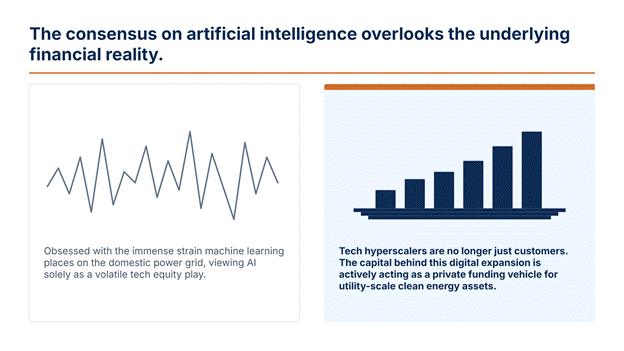
By signing multi-decade power contracts, these firms are directly financing the restart of shuttered nuclear plants and accelerating the commercialization of next-generation geothermal systems. For investors, this shift is transforming boring utility assets into highly structured, capital-intensive infrastructure opportunities that bypass traditional public markets entirely.
Underwriting the Grid’s Renaissance
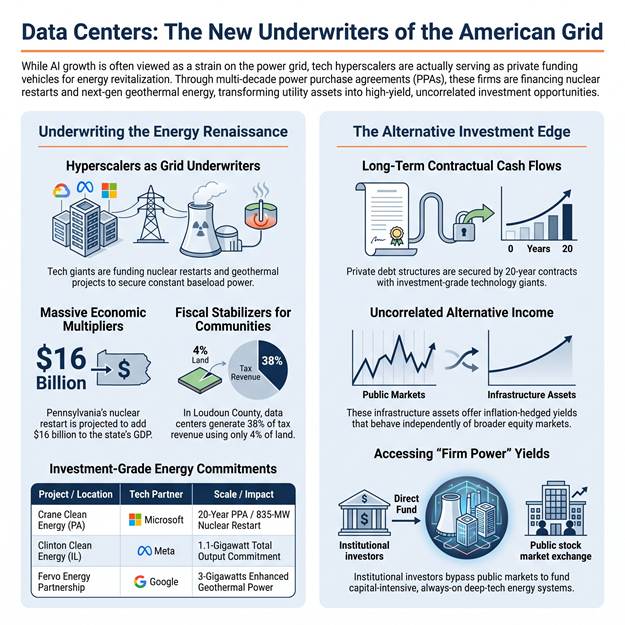
Consider the scale of these transactions. Constellation Energy is deploying $1.6 billion in capital, supported by a $1 billion federal loan, to restart the dormant 835-megawatt reactor at Three Mile Island. Now named the Crane Clean Energy Center, the project is underwritten by a 20-year power purchase agreement with Microsoft. According to an economic impact study cited by Constellation Energy, the restart is projected to add approximately $16 billion to Pennsylvania’s GDP and generate more than $3 billion in state and federal tax revenues.
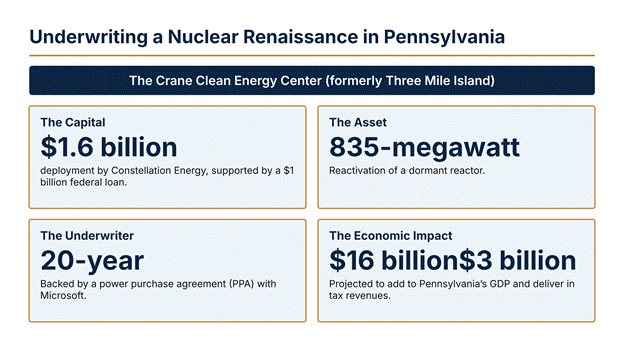
Beyond Pennsylvania, Meta has contracted the entire 1.1 gigawatt output of the Clinton Clean Energy Center in Illinois. These transactions are effectively transforming retired or underfunded utility assets into highly valuable, long-term infrastructure.
Firm Power as the New Gold Standard
Because wind and solar generation can be intermittent, data-center operators may also seek firm or continuously available power sources to support around-the-clock operations. Siting data centers requires clean, firm baseload energy that matches a continuous operating profile. To secure this, Google expanded its contract with Fervo Energy to procure up to 3 gigawatts of enhanced geothermal power by 2033.
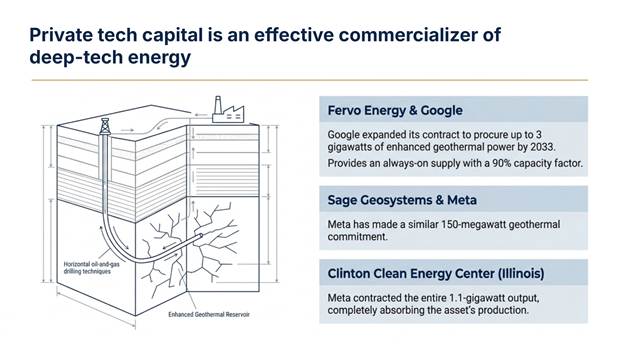
Fervo uses horizontal oil-and-gas drilling techniques to extract heat from deep rock reservoirs, providing an always-on geothermal supply with a 90% capacity factor. Meta has made a similar 150-megawatt geothermal commitment with Sage Geosystems. Private tech capital is proving to be a highly effective commercializer of deep-tech energy systems.
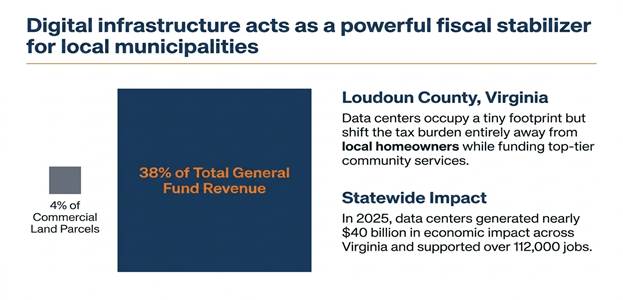
A municipal budget study out of Loudoun County, Virginia, that highlights the direct local benefits of this digital real estate boom. Data centers there occupy just 4% of the commercial land parcels in the county, yet they generate a staggering 38% of its total General Fund revenue. It is a reminder of how digital infrastructure acts as a powerful fiscal stabilizer, shifting the tax burden away from local homeowners while funding top-tier community services.
What You’re Missing
Traditional stock-and-bond allocations typically miss the structural opportunities created by this infrastructure boom. While equity investors focus on volatile tech stocks, institutional allocators are quiet partners in alternative fixed income and private credit. Financing these multi-billion-dollar energy projects requires massive debt capital, much of which is supplied through private placement. For suitable investors, these developments may create private-market investment opportunities with different risk and return characteristics than traditional publicly traded investments.
Certain private infrastructure debt investments may benefit from long-term contractual cash flows, including cash flows associated with power purchase agreements involving large technology companies. These contractual arrangements may provide a degree of cash-flow visibility, but they do not eliminate the risk of loss. Such investments may be affected by a variety of risks, including counterparty credit, project completion, operating, refinancing, interest-rate, regulatory, valuation, liquidity, and market risks. Their performance may also correlate with public equity or fixed-income markets, particularly during periods of market stress.
Ready to learn more?
To learn more about private-market infrastructure investments and whether they may be appropriate for your circumstances, please contact us.
This Caught My Eye
Earlier this summer I took my family to Iceland. In Reykjavik there is a monument to “The Unknown Bureaucrat”. Draw your own conclusions.

Infographic Summary

Spencer Wright is the Executive Vice President of Halbert Wealth Management, Inc. and the author of Forecasts & Trends. He has been with HWM for over 25 years.